
Common Uses of 60L Drums Across Industrial and Commercial Applications
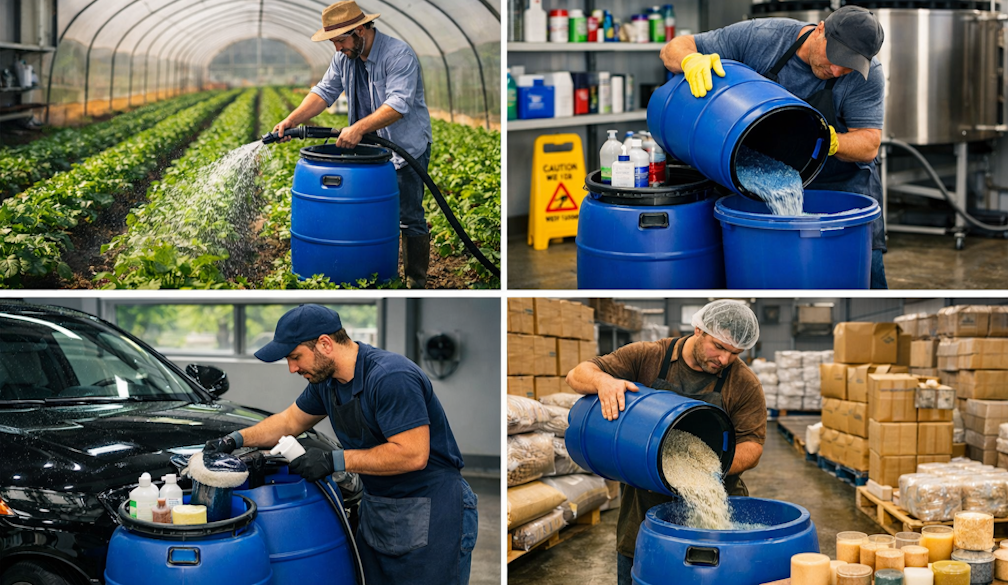
The 60L drum is one of the most widely used container formats in Australian industry, offering a practical balance between capacity and portability that suits a broad range of applications. From chemical storage through to food-grade transport, this size of drum has become a standard across multiple sectors due to its manageable dimensions and compatibility with common handling equipment. This article will explore the primary uses of the 60L drum across industrial and commercial settings, with a focus on storage, transport, safety and material considerations.
Storage and Transport Applications
In industrial environments, the 60L drum is frequently used for storing liquid chemicals, cleaning agents and other operational consumables that need to be kept in sealed containers. The 60-litre capacity sits in a practical middle ground – large enough to reduce the frequency of reordering while still being light enough for manual handling when full, depending on the density of the contents.
For transport purposes, the format is well-suited to pallet-based logistics. Multiple drums can be stacked and secured on a standard pallet configuration, which makes them compatible with most warehouse racking systems and freight arrangements. This ease of integration into existing supply chains is a significant reason why the 60L drum remains a preferred option for businesses that need to move moderate volumes of liquid or granular product between sites on a regular basis.
Safety Considerations
Proper containment is a fundamental requirement in any setting where hazardous or sensitive materials are being handled, and the drum format plays a direct role in meeting those obligations. A well-manufactured 60L drum with a secure closure system helps minimise the risk of spills during both storage and transit, which is particularly important for businesses operating under Australian workplace health and safety regulations.
Drums intended for hazardous materials must comply with relevant Australian Standards and UN packaging specifications, so it's important to confirm that any drum you're sourcing meets the appropriate certification for its intended contents and is labelled appropriately. Using a container that supports clear identification of its contents also contributes to safer handling practices across the supply chain. For operations that involve flammable or corrosive substances, selecting a drum with the correct material composition and closure rating is a non-negotiable part of the compliance process.
Material Options
The two most common material types for 60L drum production are high-density polyethylene (HDPE) and steel. HDPE drums are lightweight and resistant to a wide range of chemicals, making them well suited to applications involving acids, solvents and detergents. They're also easier to handle due to their lower empty weight and are generally more cost-effective for single-use applications.
Steel drums, on the other hand, offer superior structural rigidity and are often preferred for applications involving higher temperatures or where additional impact resistance is required during transport. The choice between materials should be guided by the specific contents and the conditions the drum will be exposed to throughout its lifecycle.
Conclusion
The 60L drum continues to serve as a practical and widely adopted container format across Australian industrial and commercial operations. Its suitability for both storage and transport, combined with the availability of different material options to match specific application requirements, makes it a reliable choice for businesses handling liquid and granular products. Ensuring that the drum selected meets the relevant safety certifications for its intended contents remains the most important consideration in any procurement decision.