

Adding a Home Battery? Why Your Switchboard Often Has to Be Upgraded First
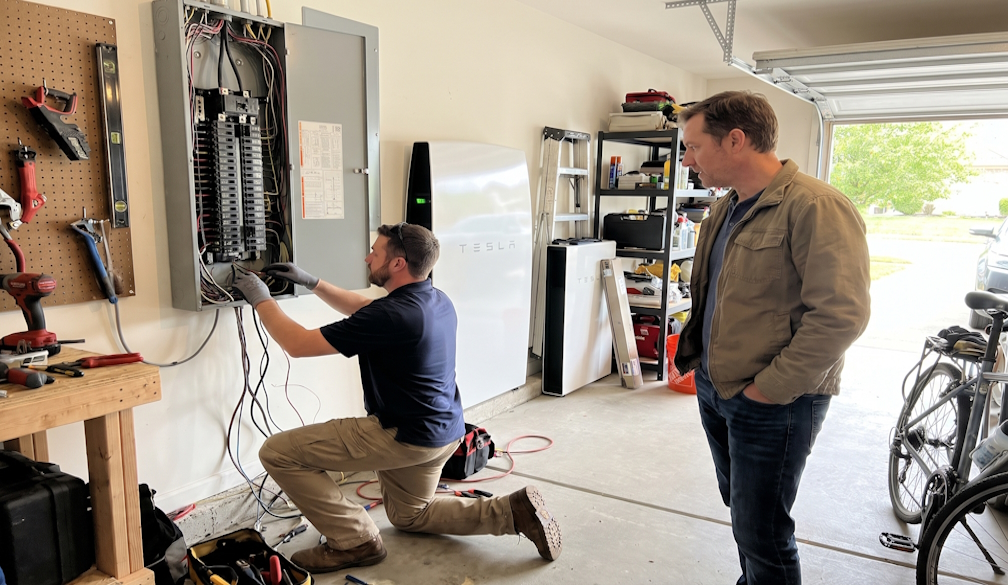
Home batteries have become far more affordable, with government incentives bringing the price down for many households. Plenty of Newcastle homes that already have solar panels are now collecting quotes to store their own power and use it after the sun goes down.
Then the quote arrives with an extra line item: switchboard upgrade required. For many homeowners, that is unexpected. The solar system has been working fine for years, so why does the switchboard suddenly need to change?
The short answer is that a battery asks much more of a switchboard than solar alone. Understanding why helps you make sense of the quote and plan the work properly.
A battery changes what the switchboard has to do
A solar system on its own usually connects into the switchboard through a dedicated circuit breaker and isolating switches. A battery system adds more equipment. Depending on the design, there may be a battery inverter, additional isolators, extra protection devices and, in many cases, a separate set of circuits that keep running during a blackout.
All of this has to be connected and protected properly within the switchboard. Installation standards for home batteries in Australia, including AS/NZS 5139, set out how this must be done. If the existing board cannot accommodate it safely, the installer cannot simply squeeze it in.
Lack of space is the most common reason
The simplest reason for an upgrade is space. Many switchboards in older Newcastle homes were sized for the household of decades ago. Over the years, extra circuits get added for air conditioning, an oven, a pool pump or an earlier solar system, and eventually there is nowhere left to fit anything else.
A battery needs its own breakers and isolators. If there are no free spaces on the board, the choice is either a larger enclosure or a replacement switchboard with room for current and future needs.
Old protection devices may not be acceptable
Some switchboards still have ceramic rewireable fuses, or circuit breakers with only one safety switch covering a few circuits. Connecting a battery to a board like this is not appropriate. Modern installations expect proper circuit breakers and safety switch protection, and the battery installation will often require these to be in place before it can proceed.
This is also a good opportunity to bring older wiring up to modern standards at the same time, rather than leaving the house with new battery equipment connected to decades-old protection.
Backup power needs a different layout
One of the main reasons people choose a battery is blackout protection. But most batteries do not back up the whole house. Instead, they power selected circuits, often called essential loads, such as the fridge, some lights and a few power points.
To make that work, those circuits usually need to be separated from the rest of the house on the switchboard, often into a dedicated section or a separate sub-board. That is rewiring work, and it is a common reason for a significant switchboard upgrade.
If you want backup power, ask exactly which circuits will be covered and how the switchboard will be arranged to make that happen.
The main switch and incoming supply
The equipment that brings power into your home also matters. The main switch, the consumer mains cable and the meter board all need to be suitable for the combined demand of the house, the solar system and the battery. In some older homes, upgrades here are needed as well.
Where work affects the network connection or the meter, an electrician with Level 2 accreditation may be involved to disconnect and reconnect the supply. The battery installer will typically handle the network connection application with Ausgrid.
Asbestos and old meter panels
Older homes may still have a meter panel that contains asbestos. If the battery installation requires changes to the meter panel, the panel may need to be replaced before any work can start. This is not something to drill into or modify casually.
If your home is older, it is worth asking about the meter panel early in the quoting process, so it does not become a surprise halfway through the job.
Who does the switchboard work?
Some battery companies have their own electricians who handle the switchboard upgrade as part of the package. Others ask you to arrange it separately before installation day. Either approach can work, provided the switchboard is designed with the battery in mind.
If you organise it separately, share the battery quote and system details with your electrician. That way the new board is laid out for the battery, the backup circuits and any future additions, such as an EV charger, rather than needing changes later.
Questions worth asking before you sign
Ask the battery installer exactly why the switchboard needs upgrading, and whether it is a space issue, a protection issue, a backup design issue or a combination. Ask whether the upgrade is included in the price or quoted separately, and whether the meter panel has been checked.
It is also sensible to get a second opinion from a Newcastle electrician who handles switchboard upgrades. They can confirm what is genuinely required, and whether a little extra work now will save another round of electrical upgrades later.
Planning it properly pays off
A switchboard upgrade can feel like an annoying extra cost on top of a battery. In practice, it is often the part of the job that makes everything else safe and reliable. A well-planned board gives the battery the space and protection it needs, separates the circuits you want during a blackout and leaves room for whatever your household adds next.