
Articulated Forklift Transforming Warehouse Flexibility And Efficiency
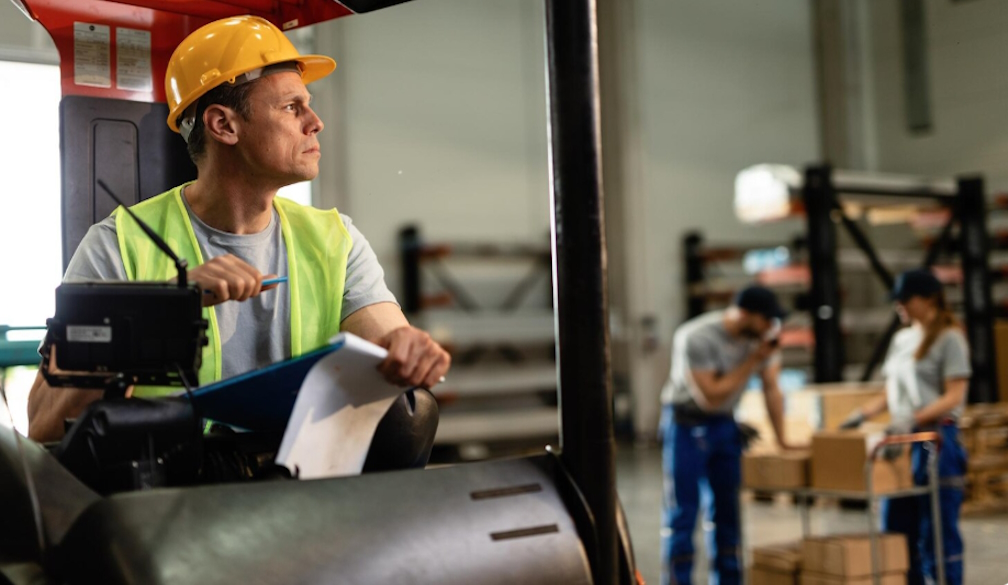
Warehouses are like intricate mazes where every turn, corner, and aisle plays a role in how efficiently operations run. In such environments, an articulated forklift acts like a master key, unlocking movement in spaces where traditional forklifts struggle. Its unique design allows the front end to pivot independently, making tight turns feel effortless and turning confined aisles into workable pathways.
As businesses push for higher storage density and smarter layouts, flexibility becomes just as important as strength. Articulated forklifts bring both to the table, offering a solution that adapts to modern warehouse demands without requiring major structural changes.
Understanding The Design That Sets It Apart
What makes an articulated forklift different from conventional models is its jointed frame. This articulation allows the forks to swing left or right while the main body remains stable, enabling precise manoeuvring in narrow aisles.
This design eliminates the need for wide turning radii, which are often required by standard forklifts. As a result, warehouses can reduce aisle widths and increase storage capacity without sacrificing accessibility.
The engineering behind articulated forklifts is focused on balance, control, and adaptability, making them a versatile choice for various applications.
Maximising Space Without Expanding Facilities
Space is one of the most valuable assets in any warehouse. Expanding physical space can be costly and time-consuming, which is why optimising existing layouts is often the preferred approach.
Articulated forklifts make it possible to redesign storage systems with narrower aisles, allowing more racking to be installed within the same area. This increases storage density and improves overall efficiency.
By making better use of available space, businesses can accommodate growing inventory without the need for additional facilities.
Improving Workflow And Productivity
Efficiency in warehouse operations depends on how smoothly goods can be moved from one point to another. Articulated forklifts enhance workflow by enabling quick and precise navigation through tight spaces.
Their ability to operate in confined areas reduces the time spent manoeuvring, allowing operators to complete tasks more quickly. This leads to improved productivity and faster order fulfilment.
A smoother workflow also reduces congestion, creating a more organised and efficient working environment.
Precision Handling In Tight Spaces
Handling goods in narrow aisles requires a high level of accuracy. Articulated forklifts are designed to provide precise control, ensuring that loads can be placed and retrieved safely.
The pivoting mechanism allows operators to align the forks accurately with storage racks, reducing the risk of damage to goods and infrastructure. This precision is particularly important in high-density storage systems.
By combining control with flexibility, articulated forklifts deliver consistent performance in challenging environments.
Enhancing Safety In Warehouse Operations
Safety is a critical aspect of any warehouse operation. Articulated forklifts are equipped with features that enhance stability and reduce the risk of accidents.
Their design allows for better visibility and control, helping operators navigate safely even in tight spaces. Additionally, many models include advanced safety features such as sensors and ergonomic controls.
A safer working environment not only protects employees but also contributes to more efficient operations by minimising disruptions.
Cost Efficiency And Long-Term Benefits
Investing in articulated forklifts can lead to significant cost savings over time. By optimising space and improving efficiency, businesses can reduce operational expenses and increase productivity.
The ability to handle multiple tasks with a single piece of equipment also reduces the need for additional machinery. This contributes to lower maintenance and operational costs.
The durability and reliability of articulated forklifts ensure long-term performance, making them a valuable investment for businesses.
Adapting To Modern Warehouse Needs
The demands of modern warehousing continue to evolve, with increasing emphasis on efficiency, flexibility, and sustainability. Articulated forklifts are designed to meet these demands, offering solutions that align with current trends.
Their adaptability makes them suitable for a wide range of applications, from small storage facilities to large distribution centres. This versatility ensures that businesses can respond to changing requirements with ease.
By embracing innovative equipment, companies can stay competitive and maintain high standards of operation.
Choosing The Right Forklift For Your Operations
Selecting the right articulated forklift involves considering factors such as warehouse layout, load capacity, and specific operational needs. Understanding these requirements helps ensure that the chosen equipment delivers optimal performance.
Professional advice can be valuable in making the right decision. Experts can assess your setup and recommend the most suitable model, ensuring efficiency and reliability.
A well-informed choice leads to better results and a more streamlined workflow.
Driving Efficiency Through Smart Design
Articulated forklifts represent a shift toward smarter warehouse solutions. Their unique design, combined with advanced features, allows businesses to maximise space, improve productivity, and enhance safety.
As warehouses continue to evolve, the need for flexible and efficient equipment will only grow. Articulated forklifts provide a practical and effective way to meet these challenges, ensuring that operations remain smooth and efficient.
In the end, it’s about turning complexity into clarity, where every movement is optimised, and every space is used to its full potential.