

Signs a Tree Has Become a Risk to Your Property
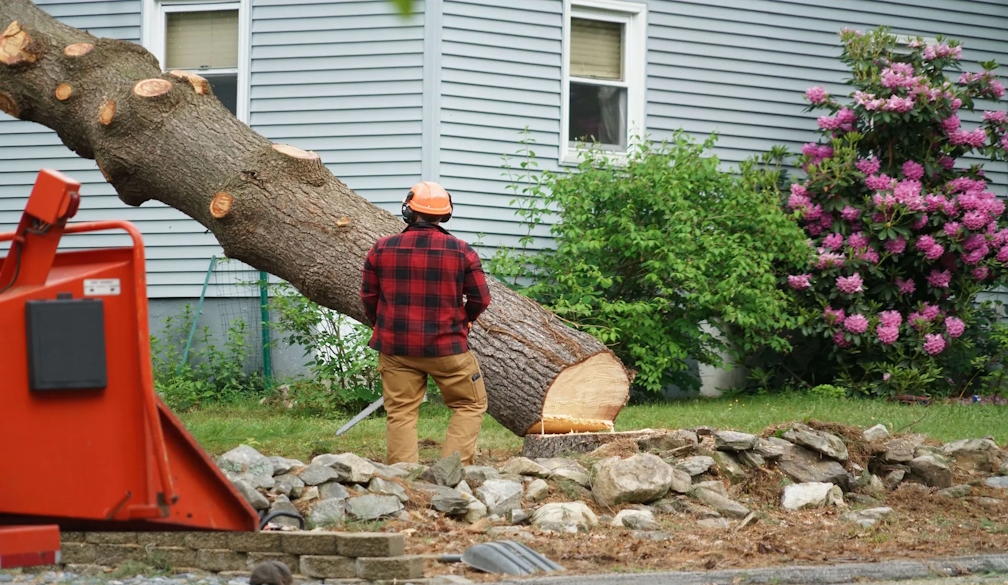
Most tree failures don't happen without warning. In almost every case, a tree that comes down onto a roof, a fence or a car has been showing signs of stress for months, sometimes years, before it finally fails. The problem is that most homeowners don't know what those signs actually look like, or assume a tree that still has green leaves must be structurally sound. Recognising the warning signs early is the difference between a manageable removal and an emergency call after the damage is already done.
This guide covers the signs that indicate a tree has become a genuine risk to a property, why some of the most dangerous trees look deceptively healthy, and what to do once a risk has been identified.
Why Tree Risk Isn't Always Obvious
A tree can look completely healthy from the ground while carrying serious internal decay, root damage or structural weakness that isn't visible without a closer look. Canopy health and structural integrity are two different things, and a tree with full green foliage can still be at genuine risk of failure if the trunk, major limbs or root system have been compromised.
This is exactly why tree risk catches so many homeowners off guard. The signs that actually matter are often subtle, easy to dismiss, or located in parts of the tree nobody thinks to check during a casual glance from the yard. Many of these trees pass an untrained glance without concern, simply because the eye is drawn to the canopy rather than the trunk base, root flare or major limb unions where the real risk indicators tend to show up first.
Warning Signs to Look For
Visible Decay and Fungal Growth
Fungal growth at the base of a trunk, on major limbs, or around root flares is one of the clearest indicators of internal decay. Mushrooms, conks or soft, spongy bark are signs that wood tissue is breaking down internally, which weakens the tree's structural strength even if the canopy still looks green and full. The location of the fungal growth matters too, since decay near the base or root flare tends to compromise the tree's overall stability far more seriously than decay confined to a single upper limb.
Leaning or Sudden Changes in Angle
A tree that has always grown at an angle isn't necessarily a concern, but a lean that has developed or worsened recently is a significant warning sign. Sudden leaning, especially after wind or rain, often indicates root failure or soil movement, both of which can precede a full collapse. A useful comparison point is checking old photos of the property, since a lean that has visibly increased over months or a year or two, compared to how the tree looked previously, is a far more reliable indicator than trying to judge the angle from memory alone.
Cracks, Splits and Included Bark
Visible cracks running along the trunk or major limbs, particularly ones that open and close slightly in wind, indicate structural weakness at that point. Included bark, where two limbs grow so closely together that bark becomes trapped between them rather than forming a strong union, creates a weak point that's especially prone to splitting under load. Vertical cracks are generally the most concerning, since they often indicate the trunk is splitting along its structural grain rather than surface bark simply weathering with age.
Dead or Dying Branches (Deadwood)
Branches without leaves during the growing season, or with bark that's peeling and brittle, are dead wood that can fail without warning, particularly during wind or storm events. A tree with extensive deadwood throughout the canopy is often signalling broader decline, even if some parts of the tree still appear healthy.
Root Damage and Soil Heaving
Soil lifting or cracking around the base of a tree, exposed roots that have been cut or damaged during nearby construction, and visible root rot are all signs that a tree's anchoring system has been compromised. Since roots are what keep a tree upright, damage here is one of the most serious risk factors, even when the rest of the tree looks unaffected. Nearby construction work is a common but often overlooked cause of this kind of damage, since excavation or trenching near a mature tree can sever a significant portion of its root system without any obvious sign above ground for months afterward.
Why Dead Trees Are a Higher Risk Than They Look
A dead tree is often assumed to be lower risk simply because it's no longer actively growing, but the opposite is usually true. Without living tissue holding branches and trunk fibres together, dead wood becomes brittle and unpredictable, prone to snapping without the warning signs a living, stressed tree might show. Dead trees also decay from the inside out, meaning a trunk can look solid on the outside while being hollow or severely weakened internally, right up until it fails.
Bark loss, a lack of new growth across an entire season, and brittle branches that snap easily rather than bending are all indicators that a tree has died, even if it's still standing and hasn't visibly fallen yet. This is part of why a dead tree situated near a house, driveway or fence line generally warrants faster action than the same dead tree standing well clear of any structure, since the consequence of an unpredictable failure differs enormously depending on what sits beneath it.
What Happens If a Risky Tree Is Left Untreated
A tree showing early warning signs rarely resolves the issue on its own. Decay progresses, root damage worsens with each significant weather event, and structural weaknesses tend to compound rather than stabilise. Left unaddressed, a tree that could have been managed with a straightforward removal or pruning can eventually fail unpredictably, often during the exact conditions, storms and high winds, when a homeowner has the least ability to react in time.
The financial risk compounds too. Property damage from a fallen tree, whether to a roof, fence, vehicle or neighbouring property, is almost always more expensive than the cost of removing a hazardous tree before it fails, and insurance claims for tree damage can be complicated if the tree showed clear prior warning signs of risk.
Assessing Risk Level and What It Calls For
Not every warning sign calls for the same urgency of response.
|
Risk Level |
Typical Signs |
Recommended Action |
|
Low |
Minor deadwood, old established lean, healthy foliage |
Monitor periodically, routine pruning if needed |
|
Moderate |
New leaning, some cracking, isolated fungal growth |
Arborist assessment recommended within weeks |
|
High |
Root damage, extensive deadwood, active decay |
Prompt professional assessment and likely removal |
|
Severe |
Recent structural failure, visible hollowing, storm damage |
Immediate action, often requiring emergency removal |
Getting an accurate read on where a tree sits on this scale is difficult without professional assessment, since several of the most serious risk factors aren't visible without a trained eye or specific inspection techniques.
When to Call for Dead Tree Removal
A tree that has died, or is clearly in advanced decline with no realistic path to recovery, should be assessed for removal rather than left standing in the hope it holds together. Dead tree removal near me searches typically increase after a storm event or once a homeowner notices a tree hasn't produced new growth for a season, but waiting until visible signs are undeniable means the tree has often already reached a genuinely risky state. Getting a dead or dying tree assessed and removed proactively, before it fails on its own terms, keeps the process controlled and predictable rather than reactive.
When a Situation Calls for Emergency Tree Removal
Some situations don't allow time for a standard assessment and scheduling process. A tree that has already partially failed, is visibly leaning further after a storm, or is hanging precariously over a structure, driveway or powerline needs an immediate response. Emergency Tree Removal Sydney services exist specifically for this kind of urgent risk, where the priority is removing the immediate danger safely rather than working through a standard booking process. Recognising when a situation has crossed from a manageable concern into an emergency is important, since the difference often comes down to how quickly a hazard needs to be addressed to prevent injury or serious property damage.
Frequently Asked Questions
How can I tell if a tree near my house is dangerous without climbing it?
Look for fungal growth at the base, cracks along the trunk, dead branches without leaves, and any recent change in the tree's lean. These signs are visible from the ground and are strong indicators that a professional assessment is worth arranging.
Is a leaning tree always dangerous?
Not necessarily. Some trees have grown at an angle for years and are structurally stable. A lean that has developed or worsened recently, especially after wind or rain, is the concerning version and warrants a closer look.
How urgent is tree removal once decay is spotted?
It depends on the extent of the decay and its location on the tree. Decay near the base or affecting major structural limbs generally warrants faster action than decay isolated to smaller, less critical branches.
Can a tree be saved once it shows signs of risk, or does it always need removal?
Some risks, like isolated deadwood or minor structural issues, can be managed with pruning rather than full removal. More severe decay, root damage or structural failure usually means removal is the safer and more practical option.
What should I do if a tree looks like it could fall during a storm?
Stay clear of the area and avoid parking vehicles or letting people near the tree until it can be assessed. If the risk is immediate, an emergency tree removal service can respond faster than a standard scheduled appointment.
Final Thoughts
Trees rarely fail without warning, but the warning signs aren't always obvious to someone without training to spot them. Fungal growth, sudden leaning, cracking, extensive deadwood and root damage are all signals worth taking seriously rather than dismissing because the canopy still looks green. Getting a professional assessment at the first sign of concern, and acting quickly when a risk becomes urgent, is what keeps a property protected before a tree becomes a genuine hazard rather than after.